WELCOME

This blog is dedicated to Malta - my island home. My aim is not to bore you with history but to share my thoughts and a few facts together with a photo or two. For a more in -depth background of the island please go here. The purpose of this blog is not to point out the short-comings of the island. There are plenty that do that already. My wish is to show you the beauty of an island at the cross roads of the Mediterranean, a melting pot of history; a place where fact and fiction are sometimes fused to create unique myths and legends; a country that has been conquered so many times that our culture is a mish mesh of the lands that surround us and of lands far away. I confess that my greatest desire is to make you fall in love with this tiny enchanting island.

Pages

Saturday, 23 March 2013

Snapshots of … St Elmo Point, Valletta

There’s another aspect to Valletta. Away from the churches, palaces and shops there is the other Valletta – the city of forts and fortified walls, the military marvel designed  by Francesco Laparelli. A few metres away from the entrance to Fort St Elmo, a flight of steps will take you down beneath the city’s massive walls.

Valletta 032

Valletta 051

Valletta 056

There’s evidence here of a deadly conflict; strange passages cut in the rocks; half-hidden staircases and forgotten bridges; strange remnants that everyone has forgotten the reason for; rock-hewn caverns and time-worn walls.

Valletta 040

Valletta 042

Valletta 039

Valletta 062

Valletta 087

Valletta 060

Valletta 082

Valletta 108

Valletta 077

Valletta 067

Valletta 076

And, of course, rock pools, boats and a wonderful view across the harbour.

Valletta 096Valletta 110

Valletta 101

Far from the Baroque  marvel, the military origins of Valletta slumber and dream …

Location: St Elmo Point, Valletta

Sunday, 17 March 2013

Inside Auberge de Castille

The Barracca Bridge and Castille (37)

The Auberge de Castille, Leon and Portugal was designed by Maltese architect Girolamo Cassar in 1574. It was remodelled and almost entirely rebuilt in 1741, under the direction of architect Andrea Belli. The auberges, of which there are several, were built to house Knights who had no residence in Malta. Auberge de Castille is, architecturally, considered to be the finest and the most grand. Of particular note is the imposing main staircase.

The Barracca Bridge and Castille (27)

 The Barracca Bridge and Castille (28)

The Barracca Bridge and Castille (30)

The person in charge of this auberge was the Grand Chancellor of the Order of St John. The Knights of Castille were responsible for the defence of a part of Valletta’s fortifications, known as St Barbara Bastion. Auberge de Castille is situated at the highest point of Valletta and commands a wonderful view of Grand Harbour and of the surrounding towns, villages and distant countryside.

The Barracca Bridge and Castille (31)

After the Knights of St John left Malta in 1798, Auberge de Castille served as the headquarters of the French occupation forces until 1800. After 1800 it became the British army headquarters. In 1972 Auberge de Castille became the office of the Prime Minister of Malta. It continues to house this office to the present day and it is usually off-limits to the public. These photos were taken during the Christmas period when the auberge was open for an exhibition of paintings of the Nativity.

The Barracca Bridge and Castille (34)

As a side-note, this Christmas tree is made of hand-blown glass spheres created and assembled by glassblowers from Mdina Glass.

The Barracca Bridge and Castille (36)The Barracca Bridge and Castille (39)

Auberge de Castille, Leon and Portugal

Castille Place

Valletta


Thursday, 7 March 2013

Snapshots of … Fawwara

I’ve already written about the chapel of Our Lady of Carmel at Fawwara here and about how it seems to be a place lost in time here. Today I just wanted to share the natural beauty of the place with you. The Spring months are beautiful here: wild flowers are plentiful, the weather is mild and the sea is a bright cobalt blue.

Fawwara 223

Fawwara 297

In unspoilt places like Fawwara, the beauty seems to be magnified ten-fold. There is a riotous exuberance about the contrasting colours of rock and sky and limestone and flowers; about a silence so profound that you can almost hear the delicate flutter of a butterfly’s wings. For those that want to escape from everything – this  is the perfect refuge.

Fawwara 214Fawwara 218Fawwara 241Fawwara 281Fawwara 286Fawwara 290Fawwara 293

Fawwara 298

Location:  Fawwara

From top to bottom: 1. Mediterranean Spring vegetation; 2. more vegetation; 3. a girna; 4. yellow wall rocket; 5 red clover and yellow wall rocket; 6. a clump of crown daisy and a deserted farmhouse; 7. more vegetation; 8. working the fields; 9. girna (from the rear); 10. giant fennel.

Sunday, 24 February 2013

The Tombs of Our Fathers

Chicken pox 032

You may all be wondering why I am sharing a photo of what seems to be a square cut out into the rocks. For many years these ‘formations’ puzzled me. When left to its own devices,  it is very rare for nature to form squares. But finally the mystery, such as it was, was solved. A few years ago I met a lady who explained who had made these squares. What we are seeing today is actually the top of a shaft that was cut into the rock. The shaft descends vertically to a tomb that is dug at right angles to the shaft and straight into the rock. From artifacts found inside the tombs it was concluded that they date back to Punic times. Appropriately, the tombs  face the setting sun. It all seems so obvious now that I wonder how I never figured it out for myself.

Punic Tomb,  Mtarfa

Tuesday, 12 February 2013

Snapshots of … Wied iz-Zurrieq (in Winter)

Wied Iz - Zurrieq (9)

Wied Iz - Zurrieq (10)

This rocky inlet located in the south-west of Malta is a favourite fishing spot with many. On calm days, colourful  Maltese boats bob about lazily in the water – a picture of complete serenity.

Wied Iz - Zurrieq (55)

But in winter, the fury of the sea is not to be trifled with and on windy days, the boats are safely brought to shore to wait for more opportune weather.

Wied iz-Zurrieq 011

Wied iz-Zurrieq 017

One must certainly exercise caution and stay away from the water because, as all those of us brought up here know, it has a very fickle nature.

Wied iz-Zurrieq 002Wied iz-Zurrieq & Jason's 4th Birthday 015

In the distance, the island of Filfla seems so close that it feels as if you can almost reach out and touch it.

Wied Iz - Zurrieq (39)

Zurrieq is derived from the Semitic word zoroq which means blue. Quite an appropriate name, would’t you say?

Wied iz-Zurrieq 001

Wied Iz - Zurrieq (28)

Location: Wied iz-Zurrieq, December 2008 &  January 2010

Thursday, 31 January 2013

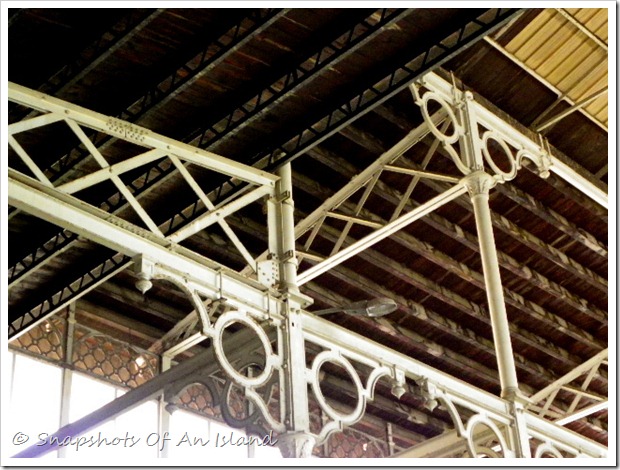
The Valletta Indoor Market (Is-Suq tal-Belt)

Valletta on a Sunday (7)

I was saddened to read Sherry Ott’s article about Valletta’s indoor market on We Blog The World. The author’s conclusion that “the (market) culture is dead” may, at face value, appear to be correct. But the author, a traveller who was probably here for not more than a couple of weeks, probably did not have the time to delve a bit deeper into this issue; into why this happened.

Valletta on a Sunday (8)

In truth, for many years, Valletta did have a thriving market. I remember going to the Valletta market in the mid-70s when the place was a bee-hive of activity. Fishmongers, vegetable sellers, butchers and grocers proudly displayed their wares, advertising them at the top of their lungs. The noise and the intermingled smell of raw fish and meat were over-powering. But is was an organised type of chaos. This was the Valletta market in its heyday – a places of smells, yells and bustling humanity.

In 1982, the government of the day took a decision to relocate the market to Floriana (it always makes sense to transfer a thriving market to a different town and expect loyal customers to follow). The Suq tal-Belt was hastily refurbished and an enterprise called ‘Ixtri Malti"’ (Purchase Maltese Products) was born. The project was doomed from the start, especially since most of the items on sale would have felt right at home in Soviet Russia, Mao’s China or Gaddafi’s Libya. One by one, the shops closed down and the building’s gates were padlocked for a number of years.
Valletta on a Sunday (9)

In the late 80s the market returned to Valletta and, although no longer quite as busy as it used to be, started to re-attract customers. Unfortunately, the fact that people had got used to shopping elsewhere, coupled with the dwindling and ageing population of Valletta, ensured that its death  knell had been rung.

Today, it is a mere shadow of what it used to me. It feels like one of those abandoned town in the American Wild West – the signs are still hanging, the infrastructure is in place, but the only footsteps that echo down the empty hallways are the ghostly echoes of times past.

What about its future? There is talk of turning it into a museum of contemporary art or into an arts and crafts market. Both ideas could work, given the necessary financing and restooration that needs to take place. Personally, I would like this building to be returned to its roots. It could so easily be a thriving place once again like Firenze’s Mercato Centrale.   Market stalls, craft booths, a couple of florists, maybe a few specialty stores and small outlets selling street food. I am sure it would not take that much effort to breathe some life into the place. As long as it is not a half-hearted effort and is imaginatively done, it will work.

Valletta on a Sunday (10)-001

Is-Suq tal-Belt (Valletta Indoor Market), Merchants’ Street, Valletta

November 2012

The Azure Window: the end of an icon

The Azure Window was a natural limestone arch that rose majestically out of the blue Mediterranean sea to a height of 28 metres (92 fee...