WELCOME

This blog is dedicated to Malta - my island home. My aim is not to bore you with history but to share my thoughts and a few facts together with a photo or two. For a more in -depth background of the island please go here. The purpose of this blog is not to point out the short-comings of the island. There are plenty that do that already. My wish is to show you the beauty of an island at the cross roads of the Mediterranean, a melting pot of history; a place where fact and fiction are sometimes fused to create unique myths and legends; a country that has been conquered so many times that our culture is a mish mesh of the lands that surround us and of lands far away. I confess that my greatest desire is to make you fall in love with this tiny enchanting island.

Pages

Monday, 30 September 2013

Of Angels And Saints


Mdina Ditch 053

They are not easy to miss – though many of us walk beneath their frozen gazes every single day without so much as a second glance. More than anything else, they are a testament to our past. To a blind, almost irrational, faith. Maybe they make us uncomfortable, those piercing, agonised stares. Time has taken its toll on most of them: faded colours, weather-worn faces, missing limbs … These are the angels and saints that our fore-fathers evoked – for a boon; for protection; for a cure.

St Agatha & Hal-Bajjada (21)

Valletta 124

St Agatha & Hal-Bajjada (40)

In towns and villages and half-forgotten country lanes, they built niches to house them or just set them atop their houses – their arms outstretched in endless benediction. Our ancestors carved them from the soft limestone or simply painted them on walls – maybe because they wanted to bring Heaven just a little bit closer to earth.

Attard (12)

Birgu (30)Bingemma, Gnejna & Dwejra (42)

Salib tal-Gholja, Delimara, Marsaxlokk (55)

They look strangely weary, our angels and saints, as if they have been battling demons for way too long. Or maybe they are just feeling lonely, standing in their dusty alcoves, dejected and forlorn. But sometimes, someone may light a candle or leave a token bunch of flowers at their weary feet. And somewhere, in a faraway Heaven, a tired saint smiles.

Mdina Ditch 080

This is a predominantly Catholic country. Churches and chapels abound, as do images of angels and saints. In 1569, Grand Master Pinto del Monte, issued a law that people who owned a corner site in the new city of Valletta had to embellish it with some ornament. This idea soon spread to the other towns and villages and it is one of the reasons that so many effigies of saints can be found in the old village cores.

Bormla 010

Valletta 152

Monday, 23 September 2013

Laundry Day in Valletta

It was a bright day in March. The sky was as blue as the local borage with only the wispiest of clouds.  I had read in a guidebook somewhere to always look up. What I saw made me smile.

Valletta 118

It was such a typically Mediterranean scene. All over the residential quarter of Valletta, laundry was hanging out to dry. It seems like the housewives of the city had been busy.

Valletta 142

(We do have dryers, of course, but most people hang their clothes to dry in the sun. The majority of houses have a roof or a yard for this activity but, in these old apartments with lots of stairs and, usually, no elevators, it is easier to hang the laundry out of the balcony.)

Valletta 149

These are the types of changes I was talking about in my last post – nothing too major. History will be interspersed with the reality of life on this small island.  Perhaps you can say that you will be seeing more of the ‘real’ Malta – blemishes and all.

Location: the streets of Valletta

Wednesday, 18 September 2013

Expect Some Changes

As you may have noticed, this blog has been on vacation. A very long vacation. But I had some thinking to do; some decisions to take – about this blog. I came close to deciding that I would no longer write here. Then I thought about it some more and I felt that a slight change  in direction might do the trick. You see, I felt that my posts were becoming a bit bland; a bit too factual and serious. It’s time for occasional doses of quirkiness; for less of the past and more of the present. So expect a few changes around here. I just hope you’ll like them.

Incidentally, I’ve been getting between three to four hundred hits a day on this blog.  I haven’t attracted any new readers nor have I noticed an increase in comments. It’s quite strange as I cannot trace the source of all this traffic. I’m not complaining, of course and hopefully, it’s a positive thing. Have any of you experienced anything similar?

That’s all for today from a very windy island.

Salib tal-Gholja, Delimara, Marsaxlokk (81)

Tuesday, 30 July 2013

Wayside Chapels: The Immaculate Conception at Wied Gerzuma

Kuncizzjoni & Gnejna 015

The chapel of the Immaculate Conception is in the middle of nowhere – or as in-the-middle-of-nowhere are you can be on this little island. I love it because of its isolated location and its simple interior. It was built in 1736 by Grand Master de Vilhena on land acquired in 1621 by Grand Master de Paule. The chapel is located on high ground in a rural setting and, on a clear day, the view is magnificent. Unfortunately, it was very hazy the day we visited so I could not really get a good photo of the scenery. This spot reminds me of childhood picnics and teenage hikes. It is certainly a place where you can get away from it all and enjoy nature at its pristine best.

Kuncizzjoni & Gnejna 001

Kuncizzjoni & Gnejna 009

Kuncizzjoni & Gnejna 006

Kuncizzjoni & Gnejna 011

Location: Chapel of the  Immaculate Conception, Wied Gerzuma, l/o Rabat


Due to an upcoming vacation, I will not be posting on this blog for a while. I would, however, appreciate your feedback to the following question: what would you like to see more of on this page?

I hope you all enjoy the rest of your summer. 

Monday, 15 July 2013

The Inquisitor’s Palace

The Inquisitor's Palace (16)

This grand palace in the heart of Birgu was initially built to serve as Law Courts during the Norman domination. The vaulted internal courtyard was built by the Knights of St John in the 1530s. In 1571 the Knights moved the Law Courts to the new city of Valletta. For three years the building remained vacant until the first Inquisitor, Pietro Dusina, took up residence. The Inquisitors remained in residence in this building until the French Occupation in 1798. The current façade was constructed in 1658.

The Inquisitor's Palace (25)

Off of the courtyard is the palace kitchen, which boasts a very well-preserved wood-burning stove. A well in one corner of the room provided water for all the kitchen’s needs.

The Inquisitor's Palace (33)

The Inquisitor's Palace (36)

The Inquisitor's Palace (38)

Also on the ground floor is a small walled garden that was designed by Inquisitor Fabio Chigi in 1634.
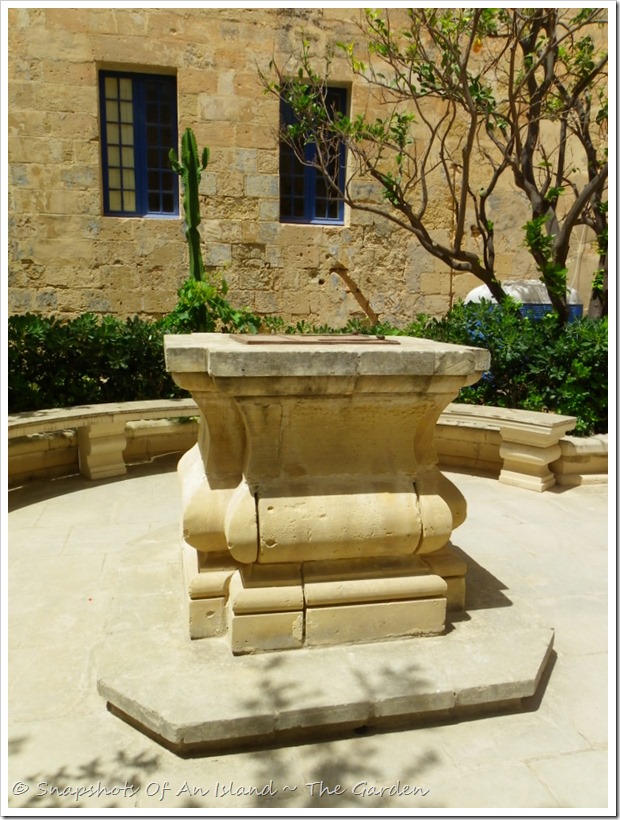
The Inquisitor's Palace (46)

An imposing staircase (that I failed to get a photo of but which you can see here) takes you up to the piano nobile, a richly decorated room that runs the entire length of the building; the Inquisitor’s apartments and his private chapel.
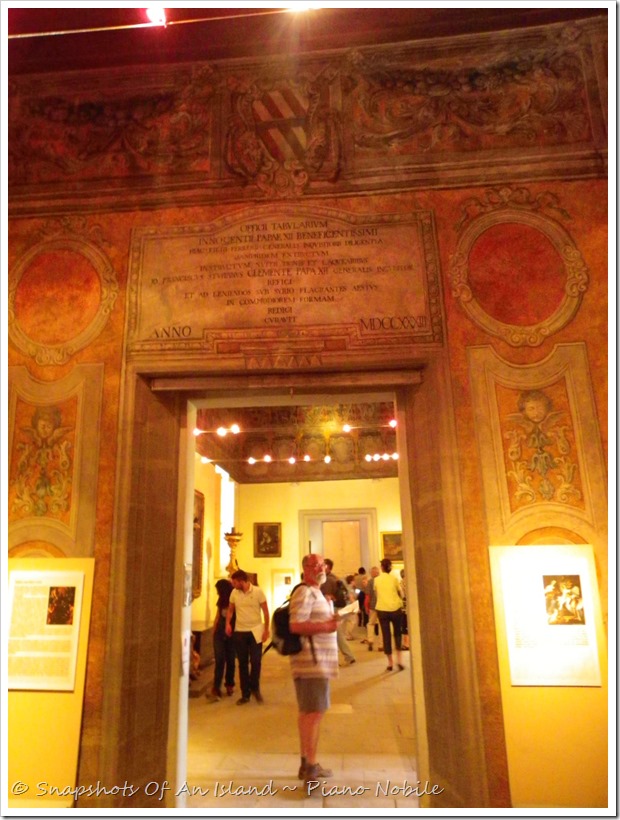
The Inquisitor's Palace (53)

The Inquisitor's Palace (57)

The Inquisitor's Palace (60)

Also on this floor is the Tribunal – the place were people were brought for trial after being reported, and sentences were pronounced. A much less grand staircase leads to the prison warden’s room, the torture room and the prisons. Another internal courtyard off of the prisons was used by the prisoners.

The Inquisitor's Palace (69)

The Inquisitor's Palace (62)

The Inquisitor's Palace (67)

The Inquisitor's Palace (74)

A total of sixty-two Inquisitors resided in this building until the last one left, together with the Knights of St John, following their expulsion by Napoleon in 1798. During the two years of French rule the palace was used as the official residence of the commander of the Cottonera district. When the British governed Malta, the palace was first used as a military hospital and then as a mess-house for officers of the army. In 1995 it was converted into a museum of folklore.

The Inquisitor's Palace (65)

The Inquisitor’s Palace is a fascinating place. It served both as the official residence of the Inquisitor and also as an ecclesiastic tribunal and prison. The prisoners’ cells, with occasional graffiti carved into the soft limestone, are, perhaps, the most poignant reminders of this bygone era. Like the town of Birgu in which it is situated, the Inquisitor’s Palace has had a chequered history. But it has withstood the test of time very well and it continues to intrigue those of us with a natural curiosity about our heritage.

The Inquisitor's Palace (71)

A NOTE ABOUT THE INQUISITION IN MALTA

The Maltese Islands fell under the jurisdiction of the Roman Inquisition, and not the more notorious Spanish Inquisition. The Inquisition acted mostly as a watch-dog to guard against heretical beliefs. The majority of sentences were of a spiritual  nature (e.g. fasting and prayer), although physical punishment (like public flogging or rowing on the galleys) was sometimes resorted to. Torture was rarely used and was usually much less severe than methods used by the civil authorities. I do not propose to go into a debate about this sore subject. All I will say is that the Inquisition was a product of its times – an era when almost none of the civil liberties that we take for granted today existed.The Inquisitor's Palace (21)

Location: The Inquisitor’s Palace, Main Gate Street,  Birgu

Opening Hours
Monday to Sunday: 9.00-17.00
Last admission: 16.30
Closed: 24, 25 & 31 December, 1 January, Good Friday

Thursday, 20 June 2013

Neolithic Malta: Mnajdra Temples

Hagar Qim & Mnajdra 035

Far away from the urban sprawl that characterises so many of our towns and villages, situated on a lonely cliff overlooking the sea and the island of Filfla, are the remains of three buildings known as the Mnajdra temples. The oldest, and simplest, building dates back to 3600BC.

Hagar Qim & Mnajdra 011-001

Hagar Qim & Mnajdra 013-001


There is much that is still unknown about these structures, much that is still conjecture and hypotheses. What we do know is that these temples were built during the Stone Age – no metal implements have been found at this site; and they most likely were  used in some sort of fertility ritual (animal remains and flint knives were excavated at this site). One of the temples (the Lower Temple) is said to have a particular astronomical alignment.

Hagar Qim & Mnajdra 014-001

Hagar Qim & Mnajdra 017-001

At the Equinoxes, the rays of the sun pass directly through the temple’s main doorway and  light up the main axis. During the summer and winter solstices, the sun lights up the megalith to the left and right of the doorway respectively. Whether this alignment is deliberate or accidental is still uncertain. The civilization that built them is long gone and they left no records behind. Evidence is scant and these structures will probably hold on to their secrets for many years to come.

Hagar Qim & Mnajdra 015

Mnajdra temples have been on UNESCO’s World Heritage List since 1992. Since their excavation in the mid-1800s, these temples were open and exposed to the elements.  The oldest temple in the Mnajdra complex is one of the most ancient man-made structures in the world and pre-dates the pyramids of Egypt by about 1000 years. In 2009 the temples were covered with a tent-like structure that, from afar, resembles a giant sombrero, to protect them from the elements – particularly the harsh summer sun.


Hagar Qim & Mnajdra 020

In 2001, considerable damage was done to these ancient buildings by a group of people who have no care for our history or our heritage. The area is now cordoned-off and guarded, but I can remember a time when there was nothing to stop you from visiting Mnajdra at any time of the day or night. I feel privileged to have had the wonderful experience of being one of only a handful of visitors there and to be able to take in the scenery, the beauty, the mystery and the awe surrounded only by silence and tranquility.

Hagar Qim & Mnajdra 022Hagar Qim & Mnajdra 023-001Hagar Qim & Mnajdra 025-001

Location: Mnajdra Temples, l/o Qrendi

Opening Hours

Winter Hours - 1st October till 31st March

Monday to Sunday: 9.00-17.00
Last admission: 16.30

Summer Hours - 1st April till 30th September

Monday to Sunday: 9.00-19.00
Last admission: 18.30

Closed: 24, 25 & 31 December, 1 January, Good Friday

Hagar Qim & Mnajdra 026

Hagar Qim & Mnajdra 006

Monday, 20 May 2013

The New Barrakka Lift

What’s so special about a lift, I might hear you ask. And, in truth, it is just a lift. But in my mind, it has taken on the aura of a legend. The first Barrakka lift opened its doors to the public in December 1905.

11707_460752637328429_1551927181_n[1]

The lift connected the harbour with the city and was a quick and efficient way of getting to Valletta from Lascaris Wharf. In the 1970s the lift was closed down and eventually dismantled. I have a very vague recollection of my father taking me for a ride on the old lift a few months before it was closed. The structure was dismantled in 1983 and all of us that remembered it, however tenuously, talked nostalgically of the lift and its vertiginous trip up and down the fortified walls underneath Upper Barracca Gardens.

The Barracca Bridge and Castille (2)

With the ever-increasing number of cruise ships berthing at Lascaris Wharf, a decision was taken to re-build a lift in the same place. In December 2012, the new Barrakka lift was inaugurated. The lift is 58 metres high and is connected to the fortifications of Valletta by a bridge. Positioned at the highest point of Valletta, the lift offers a fantastic view of Grand Harbour and the old cities of Bormla, Birgu and Isla.

The Barracca Bridge and Castille (1)

The view

The Barracca Bridge and Castille (10)-001

The lift

The Barracca Bridge and Castille (11)-001

At the base (the tunnel leads to the harbour)

The Barracca Bridge and Castille (12)-001

Looking up

The Barracca Bridge and Castille (16)The Barracca Bridge and Castille (18)-001

The Barracca Bridge and Castille (20)

The original sign from 1905

The quickest link between the harbour and the city has been restored. The legend is reborn.

Location: Barrakka Lift, Upper Barrakka Gardens, Valletta

Tuesday, 7 May 2013

Event of the Month: Faith and Humanity – an Exhibition of Paintings by Mattia Preti

Mattia Preti was born in Taverna, a small town in Calabria (Italy) in 1613. He came to Malta in 1659 as a member of the Order of the Knights of St John and died here in 1699. To mark the 400th anniversary since his birth, an exhibition of some of his major works will be held in Valletta. The exhibition will feature paintings on loan from, among others, the Prado (Madrid), the Louvre (Paris), Uffizzi (Florence), Musei Vaticani (Rome) and Museo di Capodimonte (Naples) together with local masterpieces from the National Museum of Fine Arts and various churches. During his lifetime, Preti was a prolific painter and his works adorn many a church and country chapel. The artist’s exuberant style is representative of the late Baroque period. Many consider  the narrative cycle based on the life and martyrdom of St John the Baptist that he painted on the ceiling of St John’s Cathedral in Valletta, to be his crowing glory. Mattia Preti, also known as Il Cavalier Calabrese (the Knight from Calabria), is buried in St John’s Cathedral, Valletta.

A section of the vault of St John’s Cathedral (the pink spots are from my camera)

Notte Bianca 022-001

The Mystic Marriage of St Catherine

Notte Bianca 025

Mattia Preti – Faith and Humanity

The Palace State Rooms

Valletta

4 May – 7 July

Open daily from 10.00hrs till 16.00hrs


To learn more about this exhibition that is being organised by Heritage Malta go here.

For other events in Malta in May go here.

The Azure Window: the end of an icon

The Azure Window was a natural limestone arch that rose majestically out of the blue Mediterranean sea to a height of 28 metres (92 fee...